
· by Michael Blair, Nashville's Drywall Repair
Plaster cracks for reasons drywall does not, and the fix depends on which reason it is. A fine line across a solid wall is a small job. A crack that reopens every summer, a ceiling that gives when you press it, or a wall that bulges by a door each mean something different.
The National Park Service’s guidance on repairing plaster is the clearest account of what goes wrong and how it is put right. Here is how we read a cracked plaster wall or ceiling, as part of our drywall repair and patching service.
Why do plaster walls crack?
Plaster walls crack when something behind them moves: the framing, the house on its footing, or the wood lath the plaster is keyed into. Preservation Brief 21, the National Park Service’s guide to repairing historic flat plaster, says plaster was the wall surface for nearly all buildings until the 1930s or 40s, and that once dry it should last almost indefinitely. What breaks it is structure, poor workmanship, improper curing and moisture.
The brief reads a crack by its shape. Diagonal stress cracks usually start at a door or window frame, sometimes where a later remodel cut an opening without a header over it. Diagonal cracks running in opposite directions point to settling, and the brief singles out houses on expansive clay, which shrinks in dry seasons and swells in wet ones, the kind of ground much of Middle Tennessee sits on. Horizontal cracks usually come from wood lath taking on and giving up moisture with the humidity, which is why they come back year after year.
Is a loose or bulging plaster ceiling dangerous?
A loose or bulging plaster ceiling is the plaster problem not to leave, because once plaster loses its keys, the ridges that squeezed through the lath and hold it on, the brief says gravity will eventually bring pieces down. Hairline cracks and small holes are cosmetic by comparison. Press gently beside a crack: plaster that moves under your hand has let go of the lath.
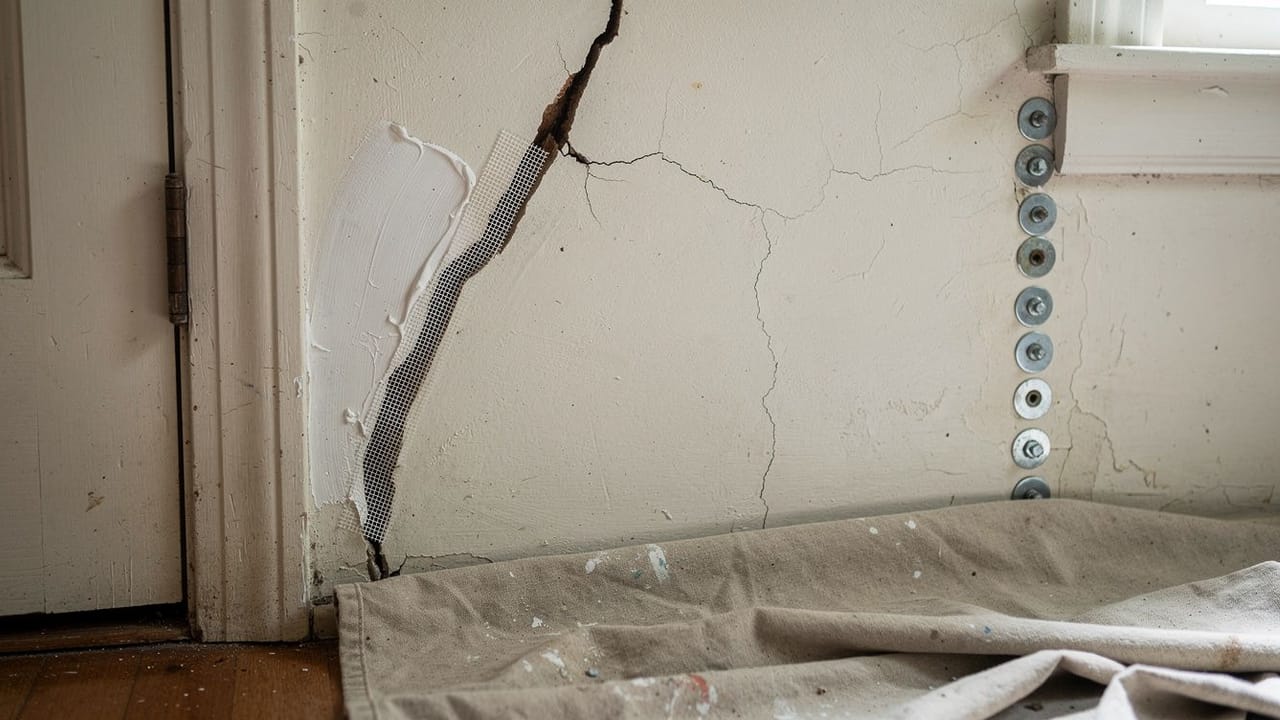
Where the plaster around a loose patch is still sound, the brief describes reattaching it with flat-head wood screws and plaster washers driven into the lath, then skim-coating over the washers and the taped crack. We do that first, before anything is filled. Where a whole ceiling is too cracked to patch or is sagging, and the damage is not from water, the brief describes leaving it in place, screwing 1x3 furring strips through it into each joist and putting new lath and plaster over them. That saves time, makes far less dust than tearing out and adds fire protection. The same furring can carry new drywall when a drywall finish is what you want.
Filling cracks so they stay closed
Filling a plaster crack so it stays closed depends on whether it moves. The brief says a hairline crack in sound plaster can simply be filled. A crack that reopens with the seasons is first widened slightly with a pointed tool, then filled. A crack that keeps coming back gets bridged: fiberglass mesh tape pressed into a quick-setting joint compound, a second coat over the tape feathered at the edges, a third to even the surface, then a light sanding and a damp sponge to take off the dust.
A large crack from structural movement is a different repair. The brief says the structural problem is fixed first, then the plaster is cut back about 6 inches on each side to the lath, metal lath goes over the old wood lath, and the gap is filled in three layers. If a crack seems to be getting wider, the brief’s advice is a structural engineer, and ours is the same, because a patch over a crack that is still opening only hides it for a season. For the drywall version of a crack that will not stay shut, see our post on truss uplift.
What should you know before plaster comes out?
Before any plaster comes out, know what is in the dust. The brief warns that old plaster dust can carry decades of coal soot, that lead from lead-based paint is a danger, and that asbestos was used in some mid-twentieth-century plaster as an insulating and fireproofing additive. It calls for masks, long sleeves and eye protection, and for prying damaged pieces loose with a trowel or bar rather than pounding the wall when the rooms next door are still sound.
Lead adds a legal step. The EPA’s Renovation, Repair and Painting rule requires firms that disturb lead-based paint in homes built before 1978 to be certified and to use certified renovators who follow its work practices. Our post on lead paint and drywall repair covers what that means on a job.
We repair, reattach and cover plaster in older houses across Nashville and the towns around it. To have a cracked wall or a loose ceiling looked at, ask us for a free estimate.
Sources
- National Park Service, Preservation Brief 21: Repairing Historic Flat Plaster Walls and Ceilings (Marylee MacDonald, 1989) — Plaster nearly universal until the 1930s or 40s; causes of cracking (stress, settlement on expansive clay, lath movement, lost keys); filling and taping cracks; structural cracks cut back about 6 inches and relathed; engineer for expanding cracks; screws and plaster washers; furring and replastering over a ceiling; soot, lead and asbestos in plaster dust.
- U.S. Environmental Protection Agency, Lead Renovation, Repair and Painting Program Rules — Firms disturbing lead-based paint in homes built before 1978 must be certified and use certified renovators following required work practices.
FAQ
Cracked Plaster Walls: Repair, Reattach or Cover — questions
Can you put drywall over cracked plaster?
Often, as long as the plaster is not loose or wet. The National Park Service brief describes fastening furring strips through a cracked or sagging ceiling into each joist and building the new surface on them, which avoids demolition and dust. Loose plaster gets reattached or removed first, and water damage is fixed before anything covers it.
What are plaster washers used for?
Plaster washers go under a screw head to pull loose plaster back against the lath and spread the screw’s hold. The National Park Service brief describes using them with flat-head wood screws where the plaster around a loose area is still sound, then covering the washers and the taped crack with a skim coat.
Why do horizontal cracks keep coming back in plaster walls?
They usually come from the wood lath behind the plaster, which takes on moisture from the air and swells, then shrinks as it dries. The National Park Service brief says this movement can make cracks appear year after year. A crack like that is widened slightly and filled, or bridged with mesh tape and compound.
When should a crack in a plaster wall worry me?
When it keeps getting wider, when the plaster beside it moves under your hand, or when it runs where two walls meet. The National Park Service brief calls for a structural engineer if a crack seems to be expanding, and says a crack at the junction of walls may be structural and worth investigating.
Is old plaster dust dangerous to breathe?
It can be. The National Park Service brief warns that old plaster dust may hold decades of coal soot, lead from lead-based paint and, in some mid-twentieth-century plaster, asbestos. It calls for masks, long sleeves and eye protection during removal, and in a house built before 1978 the EPA’s lead rules apply to the work.